Automation

WhatsApp Automation for Logistics Companies: Automate Shipment Updates, Customer Communication & Delivery Tracking

I
Inaiwazhi Team
2026-06-02
6 min read
WhatsApp Automation for Logistics Companies: Automate Shipment Updates, Customer Communication & Delivery Tracking
Share this article

Automate shipment updates, customer communication, delivery notifications, payment reminders, and logistics workflows using AI-powered WhatsApp automation for logistics companies.

Key Takeaways from this Article:

  • Explore in-depth strategies for automation automation
  • Learn how to implement scalable workflows for your business
  • Understand the best practices for customer communication and engagement
  • Actionable insights to boost your ROI and productivity

Most logistics companies still operate using a traditional process: Phone Calls → Manual Tracking → Customer Follow-Up → Delivery Coordination → Status Updates. The problem with this workflow is simple: customers repeatedly call for shipment updates, support teams spend hours answering tracking requests, delivery communication gets delayed, manual updates create operational bottlenecks, and important notifications are often missed. Today's customers expect real-time shipment visibility and instant responses. Businesses that still depend on manual communication processes face increasing operational challenges and customer dissatisfaction. With AI-powered WhatsApp logistics automation, companies can automatically communicate shipment information, delivery updates, payment reminders, and customer support responses directly through WhatsApp.

Key Takeaways from this Article:

  • Learn how WhatsApp automation improves logistics operations
  • Discover why customers prefer real-time shipment updates on WhatsApp
  • Understand how automation reduces support workload
  • Learn how AI-powered workflows improve delivery communication
  • Explore the best logistics automation strategy for 2026

Why Traditional Logistics Communication Slows Down Operations

Most logistics companies still operate using a traditional process: Phone Calls → Manual Tracking → Customer Follow-Up → Delivery Coordination → Status Updates. The problem with this workflow is simple: customers repeatedly call for shipment updates, support teams spend hours answering tracking requests, delivery communication gets delayed, manual updates create operational bottlenecks, and important notifications are often missed. Today's customers expect real-time shipment visibility and instant responses. Businesses that still depend on manual communication processes face increasing operational challenges and customer dissatisfaction.

What is WhatsApp Logistics Automation?

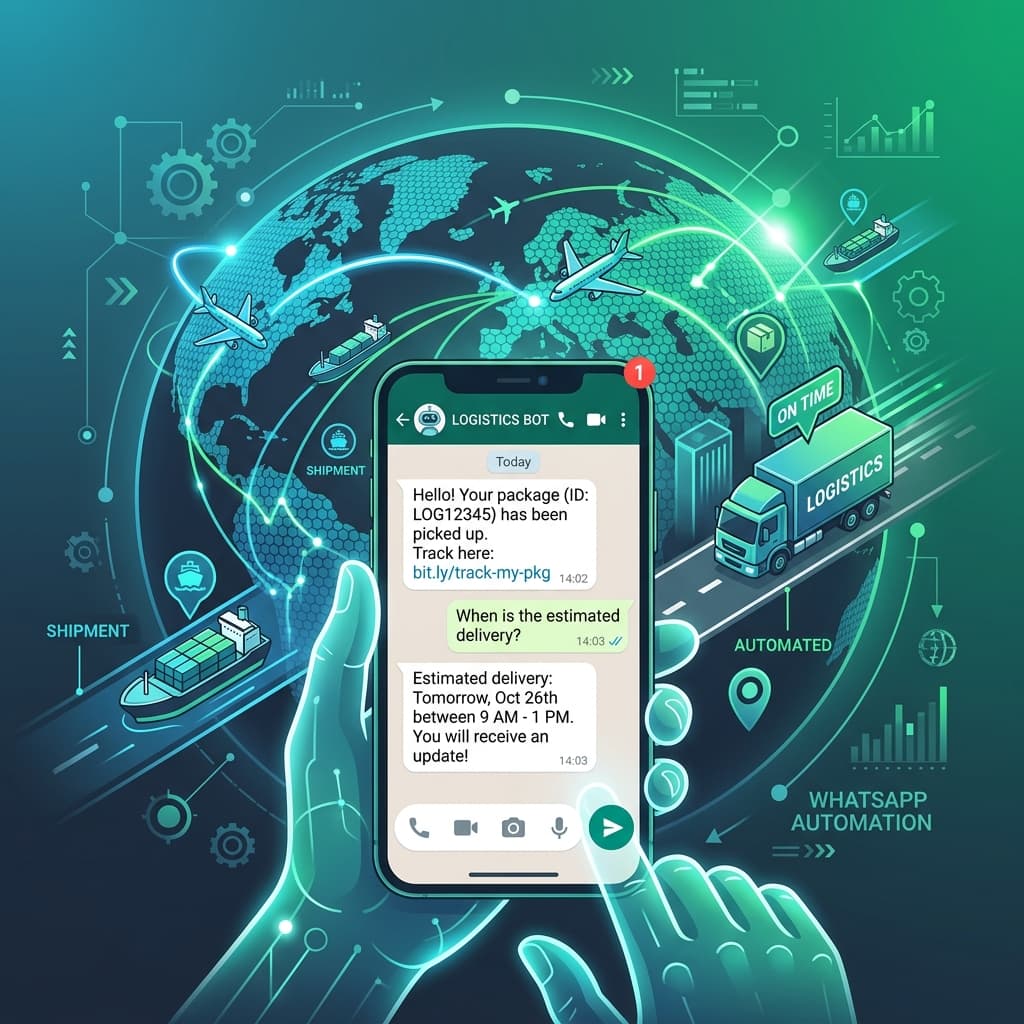
WhatsApp logistics automation allows logistics companies to automatically communicate shipment information, delivery updates, payment reminders, and customer support responses directly through WhatsApp. Instead of manually updating customers, the system automatically manages communication throughout the shipment lifecycle. This creates a faster, more scalable, and customer-friendly logistics operation.

How WhatsApp Automation Changes Logistics Operations

With AI-powered automation, logistics companies can automate the complete customer communication workflow. This changes the dynamics of transport operations across these core areas:

1. Automated Shipment Confirmation

The moment a shipment is booked, customers receive instant confirmation on WhatsApp, setting expectations and confirming booking details.

2. Real-Time Tracking Updates

Customers automatically receive shipment status updates without contacting support, keeping them in the loop at every milestone.

3. Automated Delivery Notifications

Dispatch alerts, estimated arrival updates, and delivery confirmations are sent automatically to keep the delivery window precise.

4. Payment Reminder Automation

Pending invoice reminders and payment notifications can be scheduled automatically, ensuring faster cash flows.

Example Use Case: Logistics Company Automation

A customer books a shipment. The automation workflow handles:

  1. Shipment Confirmation: Sent instantly through WhatsApp.
  2. Shipment Tracking: Real-time tracking updates are shared automatically.
  3. Delivery Notifications: Customers receive dispatch and delivery alerts.
  4. Payment Reminders: Outstanding invoices trigger automated reminders.
  5. Customer Support: AI chatbot answers tracking and delivery questions instantly.
  6. Feedback Collection: Customers receive feedback requests after successful delivery.

This reduces manual coordination, improves customer experience, and allows logistics teams to handle more shipments efficiently.

Industries That Can Use This Solution

WhatsApp logistics automation helps various transportation and supply chain businesses:

  • Logistics Companies – Automate shipment communication and tracking.
  • Transport Companies – Manage customer communication efficiently.
  • Courier Services – Provide real-time delivery updates.
  • Freight Forwarders – Automate shipment notifications and documentation.
  • Supply Chain Companies – Improve visibility and communication across operations.
  • E-commerce Logistics Providers – Deliver seamless customer tracking experiences.

The ROI Difference

Without Automation With WhatsApp Automation
Customers repeatedly call for updates Automated real-time tracking updates
Support teams handle repetitive queries AI handles routine communication
Manual delivery notifications Instant automated alerts
Higher operational workload Streamlined communication workflows
Poor customer visibility Complete shipment transparency

The difference is not simply operational efficiency—it is about delivering a superior customer experience while scaling logistics operations.

Inaiwazhi Insider Tip

Start by automating shipment confirmations, tracking updates, and delivery notifications before implementing advanced AI chatbot workflows. This delivers immediate operational improvements and customer satisfaction gains.

Conclusion: WhatsApp is the Future of Logistics Communication

The logistics industry is moving toward real-time, automated customer communication. Businesses using WhatsApp automation reduce support workload, improve customer satisfaction, increase shipment visibility, and scale operations more efficiently.

The future of logistics is automated, conversational, and customer-centric. Ready to automate logistics communication on WhatsApp? Transform your logistics operations with Inaiwazhi's AI-powered WhatsApp automation platform today.

Why Logistics Companies Are Moving to WhatsApp Automation

Faster Customer Communication

WhatsApp messages are opened and responded to significantly faster than email or SMS, keeping customers instantly informed.

Better Customer Experience

Customers receive shipment updates instantly without contacting support, ensuring complete peace of mind.

Reduced Support Workload

Automation handles repetitive communication tasks, allowing support teams to focus on critical issues.

Improved Operational Efficiency

Teams spend less time on communication and more time on core logistics and transport operations.

Better Shipment Visibility

Customers stay fully informed throughout their entire delivery journey with real-time tracking logs.

How WhatsApp Shipment Tracking Works

Allow customers to receive shipment updates directly on WhatsApp through an automated workflow in 5 steps:

1

Step 1: Customer Books Shipment

Shipment details are recorded in the logistics system.

2

Step 2: WhatsApp Confirmation Sent

Customers receive booking confirmation instantly on their WhatsApp.

3

Step 3: Shipment Tracking Activated

Real-time tracking updates are automatically triggered and synced.

4

Step 4: Delivery Notifications Shared

Dispatch alerts, estimated arrival updates, and delivery confirmations are sent automatically.

5

Step 5: Successful Delivery

Delivery confirmation and feedback requests are shared with customers automatically.

Example Use Case: Logistics Company Automation

When a customer books a shipment, the automated workflow seamlessly handles the entire communication lifecycle:

Shipment Confirmation: Sent instantly through WhatsApp once booking is confirmed.
Shipment Tracking: Real-time tracking links are shared automatically.
Delivery Notifications: Customers receive automated dispatch, transit, and delivery alerts.
Payment Reminders: Outstanding invoices trigger scheduled payment reminders.
AI Customer Support: An AI chatbot answers tracking and delivery questions instantly 24/7.
Feedback Collection: Customers receive automated feedback surveys post-delivery.

5 Reasons Why Logistics Operations Become Inefficient

No Structured Communication Process

Manual updates create confusion and delays across supply chain stages.

Delayed Customer Responses

Slow communication affects customer satisfaction and vendor trust.

Repetitive Tracking Requests

Support teams spend hours answering repetitive shipment status queries.

Missing Delivery Updates

Customers become frustrated when real-time information is unavailable.

Lack of Visibility

Customers expect complete shipment tracking and transparency throughout the delivery cycle.

Inaiwazhi Insider Tip

Start with simple automation workflows like welcome messages and FAQs before implementing complex chatbot scenarios. This helps you understand customer needs and refine your approach.

Scale Your Business with inaiWAzhi

Ready to Transform Your Customer Communication?

Join thousands of businesses using inaiWAzhi to automate WhatsApp conversations, increase sales, and deliver exceptional customer experiences at scale.

No credit card required • 7-day free trial • Cancel anytime

Support

Frequently Asked Questions

Find quick answers to common questions about WhatsApp Automation

Conversation

0 Comments

Leave a reply

* Use the same email to edit or delete your comments.

No comments yet

Be the first to share your thoughts!

Get Exclusive Marketing Tips

Join 10,000+ marketers receiving expert insights and automation strategies for WhatsApp.

Privacy first. No spam, unsubscribe anytime.