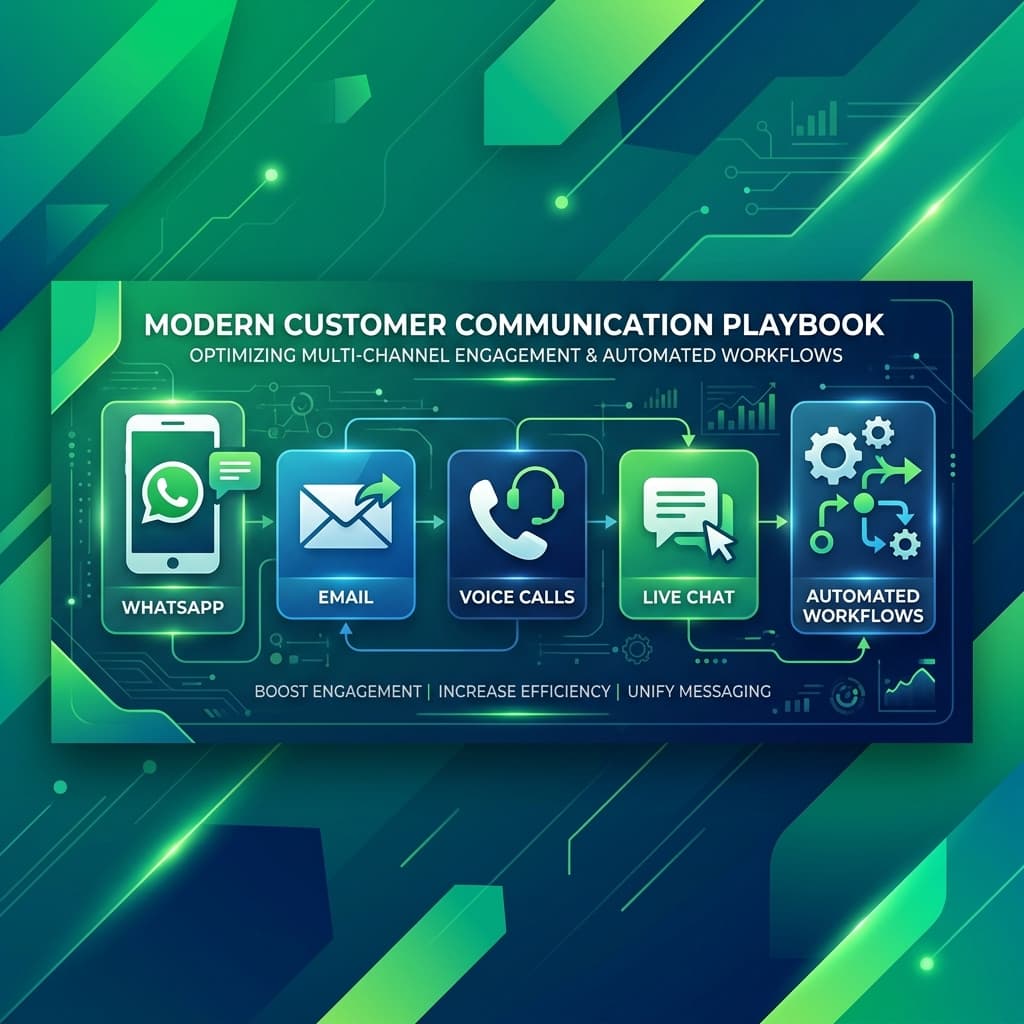
Key Takeaways from this Playbook
- Why fast, clear, and consistent customer communication drives revenue growth
- Detailed breakdown of the 6-stage modern customer journey (Awareness to Support)
- The 5 core principles of effective customer communication
- How to manage WhatsApp, Email, Phone Calls, and Website communication channels
- 6 frequent communication pitfalls and how to prevent them
- How Inaiwazhi WhatsApp Business Platform centralizes team collaboration and automation
Customer communication is no longer just about answering questions. Every conversation influences how customers perceive your business, whether they decide to buy, and whether they return in the future.
Businesses that communicate clearly, consistently, and quickly are often better positioned to build trust and long-term relationships. This playbook outlines practical strategies to help you improve customer communication across every stage of the customer journey.
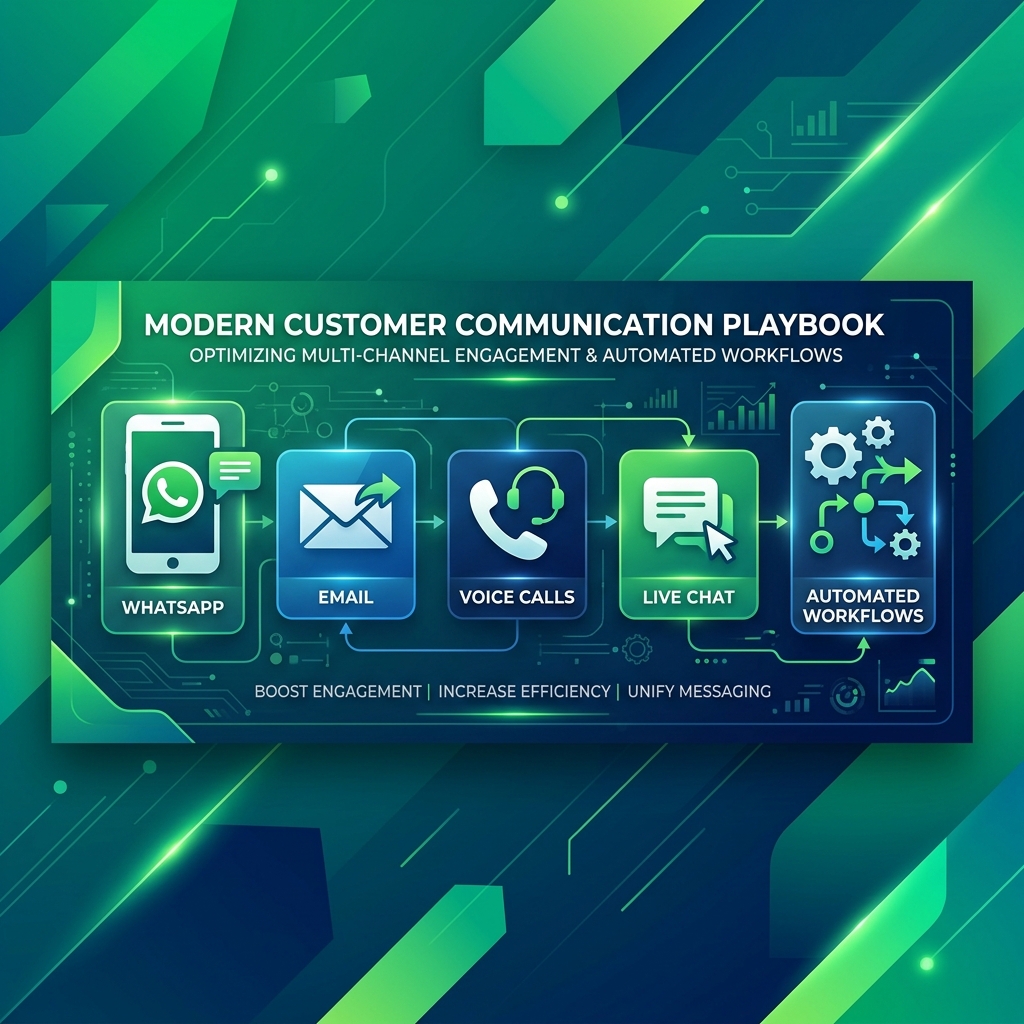
Why Customer Communication Matters
Today’s customers expect businesses to be:
- Easy to contact: Multi-channel access across WhatsApp, Web, Email, and Phone.
- Quick to respond: Instant acknowledgment and rapid answer turnaround.
- Consistent across channels: Uniform quality regardless of who responds.
- Helpful and accurate: Direct answers without confusing technical jargon.
- Available when they need assistance: 24/7 availability backed by automated workflows and AI.
When communication falls short, businesses may experience:
- Missed enquiries & lost sales opportunities
- Delayed responses that frustrate potential buyers
- Customer dissatisfaction & negative word of mouth
- Lower customer retention and recurring lifetime value
Strong communication directly mitigates these risks and builds a foundation for long-term customer loyalty.
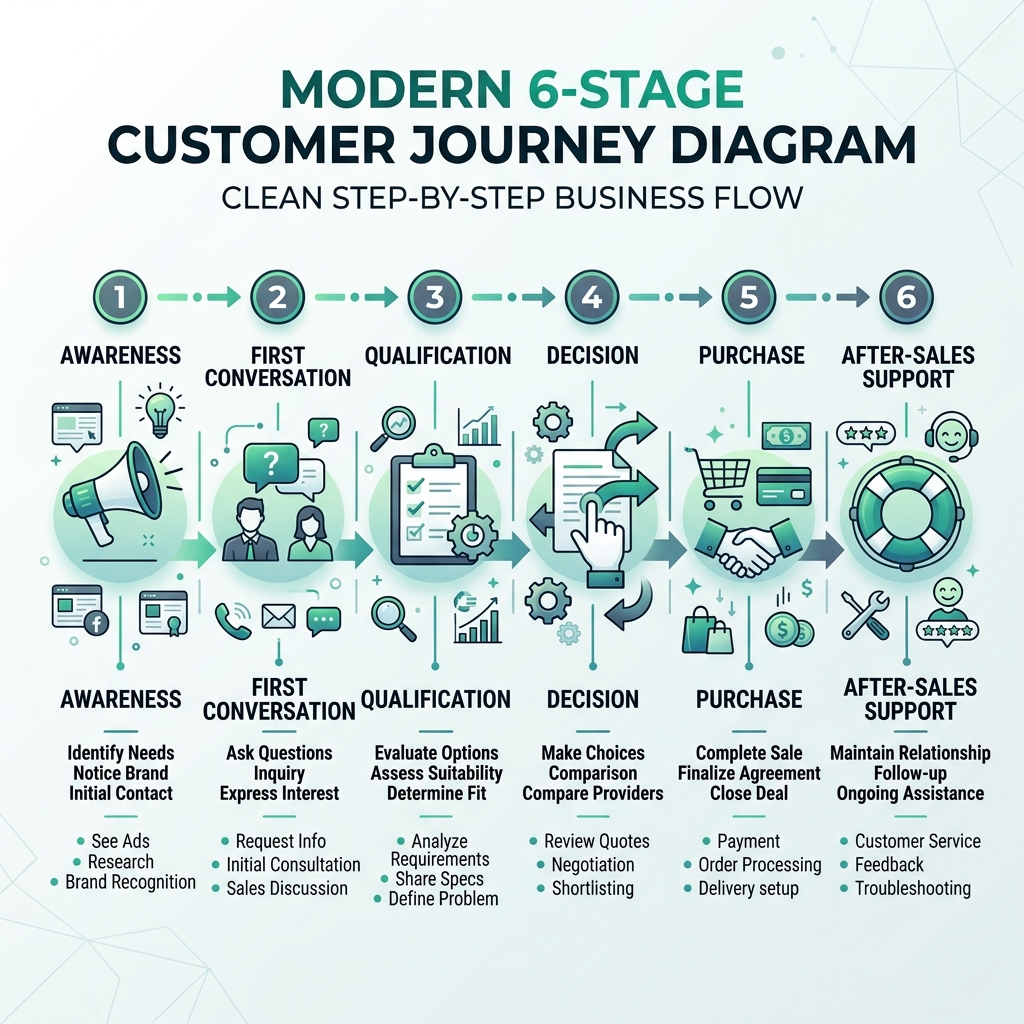
The Modern Customer Journey Breakdown
Every customer interaction is part of a larger journey. Optimizing communication at each milestone ensures maximum conversion and retention.
Stage 1 — Awareness
The customer discovers your business through Google Search, Social Media, Website, Advertisements, or Word-of-Mouth Referrals. Goal: Make it as easy as possible for customers to contact you instantly (e.g., via click-to-WhatsApp links or web widgets).
Stage 2 — First Conversation
Customers usually ask about price, stock availability, product specifications, or service packages. Best Practice: Respond clearly, professionally, and as quickly as possible. An instant reply sets a high standard for customer service.
Stage 3 — Qualification
Understand the customer's exact requirements, budget, project timeline, location, and specific business needs. Avoid giving every customer the exact same generic response.
Stage 4 — Decision
Customers compare your brand against competitors on experience, trust, response speed, and overall value. Communication quality often influences this purchase decision as much as pricing.
Stage 5 — Purchase
Make purchasing completely frictionless. Share quotations, digital invoices, payment links, and shipping/delivery details promptly. Keep customers informed at every step of the transaction.
Stage 6 — After-Sales Support
Many businesses focus solely on acquiring new customers. However, long-term growth depends on post-purchase support. Provide real-time order updates, service assistance, feedback collection, and periodic check-ins.
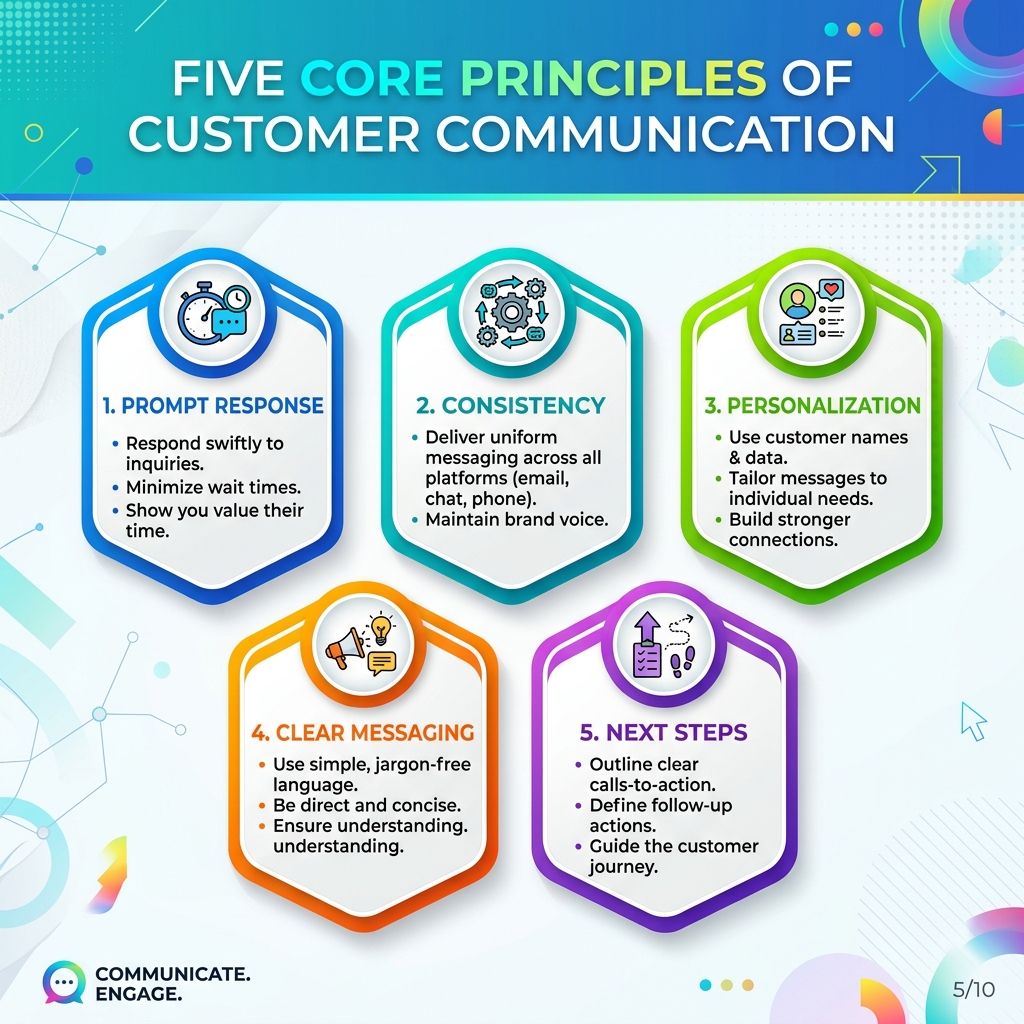
The Five Principles of Great Customer Communication
1. Respond Promptly
Customers appreciate timely responses. Even if a complete answer isn’t immediately available, acknowledging their enquiry sets expectations and prevents them from reaching out to competitors.
2. Be Consistent
Every team member should communicate with the same level of professionalism, brand tone, and accuracy. Consistency builds lasting customer trust.
3. Personalize When Appropriate
Use customer names, order history, and previous chat context to provide relevant responses. Small personal touches dramatically improve customer experience.
4. Keep Messages Clear & Structured
Avoid long blocks of dense text. Use short sentences, bullet points, bold key terms, and explicit calls to action (CTAs).
5. Always End with the Next Step
Guide the customer forward. Examples include: scheduling a demo, requesting additional details, confirming an appointment, or completing a payment.
Communication Channels Every Business Should Manage
- WhatsApp: Ideal for fast customer enquiries, support, sharing digital catalogues, appointment reminders, and automated order updates.
- Email: Best suited for detailed proposals, contractual agreements, invoices, and formal corporate documentation.
- Phone Calls: Essential for complex consultative sales, high-ticket deal closing, and urgent issue resolutions.
- Website: Must feature user-friendly contact forms, comprehensive FAQs, live chat widgets, and direct communication links.
Common Communication Mistakes to Avoid
Recognizing and correcting these frequent issues is essential to scaling customer engagement:
- ❌ Slow responses: Letting leads sit unaddressed for hours or days.
- ❌ Inconsistent information: Representatives stating different terms, prices, or policies.
- ❌ No follow-up process: Dropping conversations after the initial inquiry without a structured nurture sequence.
- ❌ Uncoordinated team replies: Multiple representatives sending overlapping or contradictory messages.
- ❌ Losing conversation history: Forcing customers to re-explain their situation every time they contact you.
- ❌ Generic auto-responses: Sending cold, robotic templates that fail to address the customer's specific needs.
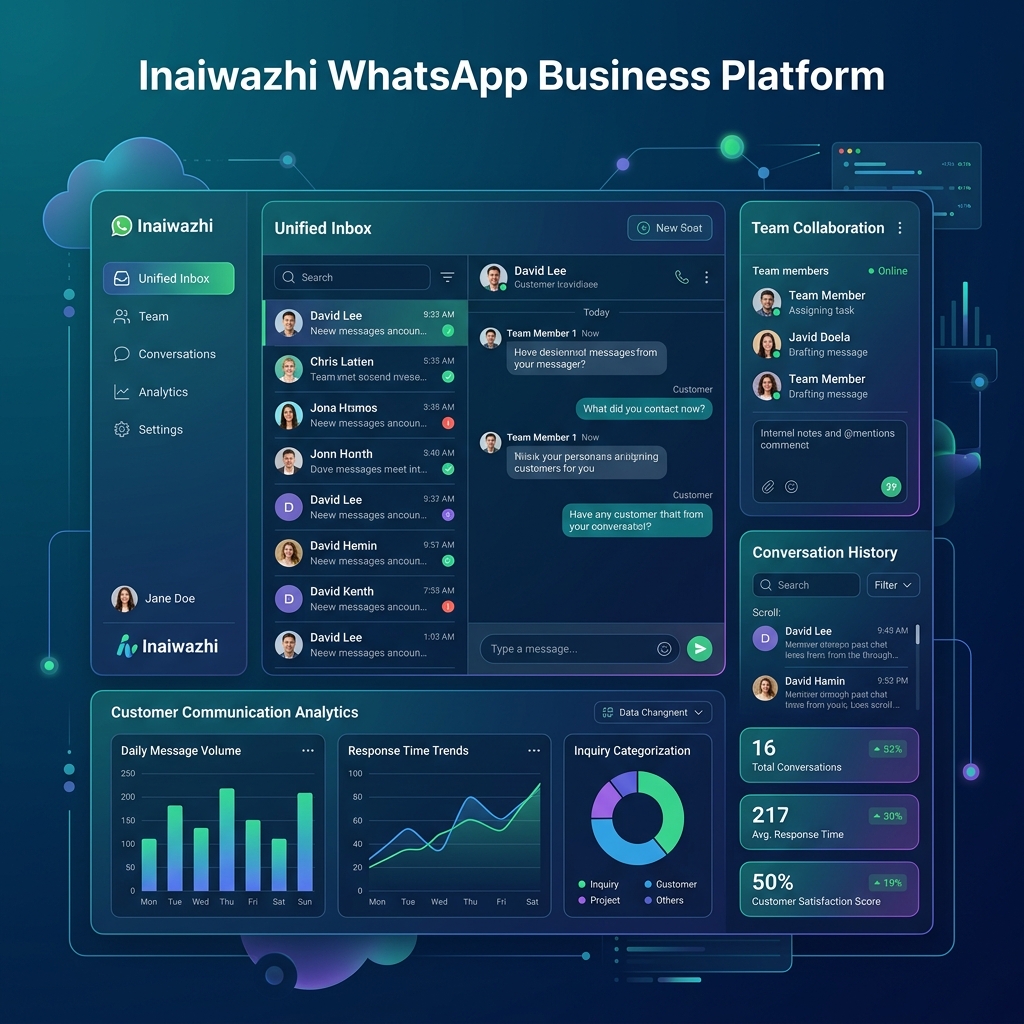
Building a Scalable Communication Process with Inaiwazhi
As your business grows, customer communication should become more organized—not more complicated. Well-defined processes supported by modern technology help your team deliver a consistent experience.
How Inaiwazhi Supports Better Customer Communication:
Effective communication requires more than messaging—it requires visibility, collaboration, and consistency. Inaiwazhi is designed to help businesses across India:
- Manage customer conversations in one place: Centralize incoming chats across your team.
- Enable seamless team collaboration: Shared team inbox and assignment tools.
- Organize customer history: Keep track of previous chats, orders, and tags for complete context.
- Streamline repetitive communication: Automate welcome messages, follow-ups, and FAQs.
- Gain actionable insights: Monitor response times, conversion rates, and team metrics.
Final Thoughts
Every business grows through conversations. A quick response can build trust. A thoughtful follow-up can strengthen relationships. A consistent customer experience can encourage long-term loyalty.
Whether you’re a startup or an established business, improving the way you communicate with customers is an investment that benefits every stage of the customer journey. Technology supports that effort—but your communication strategy creates lasting relationships.
Transform Your Customer Communication Today
Organize customer conversations, support team collaboration, and create better customer experiences with Inaiwazhi WhatsApp Business Platform.
Start 7-Day Free Trial

Conversation
0 Comments
Leave a reply
No comments yet
Be the first to share your thoughts!