Key Takeaways from this Article:
- Why WhatsApp automation is outperforming email marketing
- The engagement gap between WhatsApp and email
- How conversational automation improves conversions
- Where email marketing still works effectively
- How businesses use Inaiwazhi to automate customer communication
The Numbers Tell the Story
Customer behavior has changed dramatically over the last few years. People now prefer instant messaging, faster replies, mobile-first communication, and personalized conversations. Traditional email marketing struggles to match these expectations.
| Channel | Average Open Rate | Average Response Time |
|---|---|---|
| WhatsApp Automation | 98% | Under 2 Minutes |
| Email Marketing | 21% | Around 24 Hours |
That difference alone impacts lead generation, customer support, sales conversion, customer retention, and follow-up success.
Why Email Marketing Is Losing Engagement
Email marketing is still useful — but its effectiveness is declining for fast-moving customer communication. Most users receive promotional emails, newsletters, automated sequences, cold outreach, and spam messages. As inbox competition increases, open rates drop, click rates decline, customer trust weakens, and responses become slower. For businesses that rely on speed and engagement, email is no longer enough.
Why WhatsApp Automation Converts Better
WhatsApp feels personal. Unlike email, it creates real-time interaction, instant notifications, faster replies, conversational engagement, and mobile-native experiences. Customers are significantly more likely to respond when communication feels natural instead of promotional. This is where WhatsApp automation changes the game.
Sending Messages vs. Building Conversations
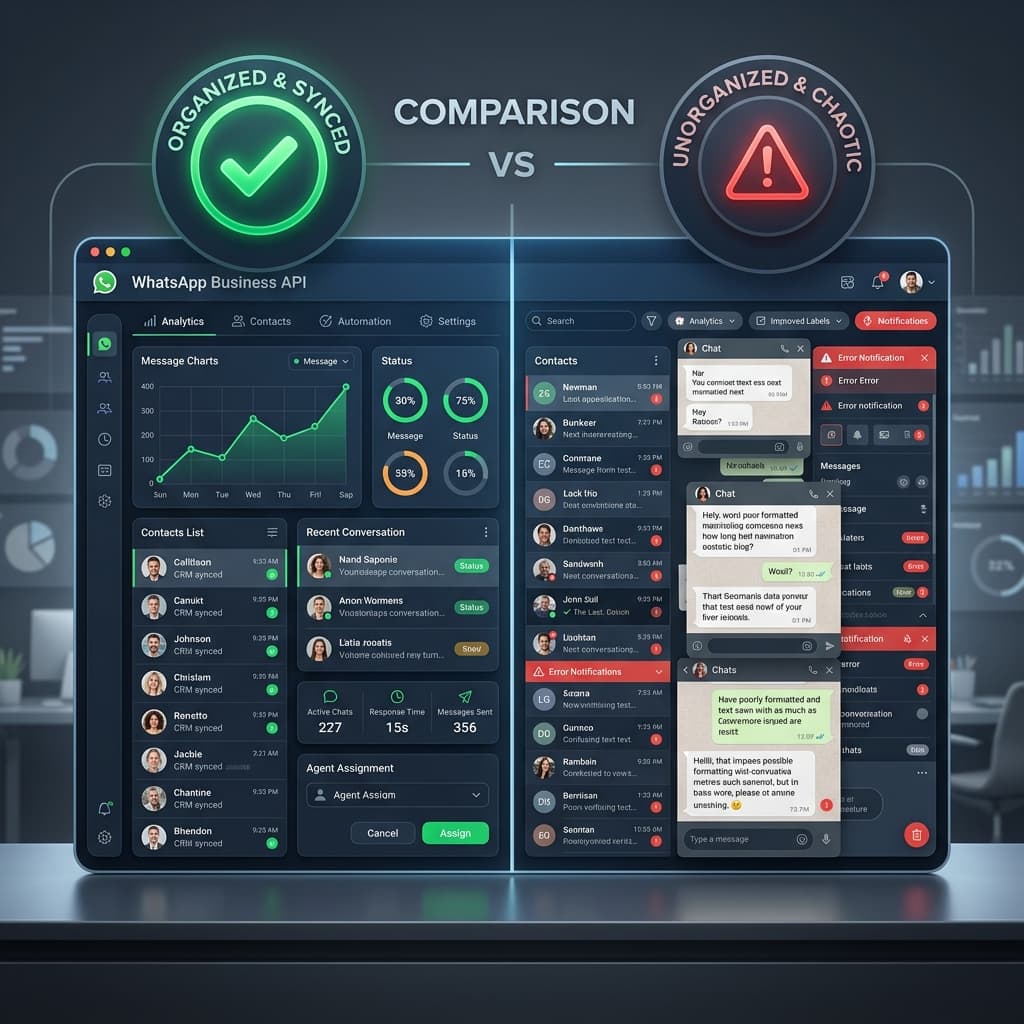
One of the biggest mistakes businesses make is treating WhatsApp like bulk SMS. More messages do not automatically mean more sales. High-converting businesses build structured customer journeys: Entry → Qualification → Guidance → Follow-Up → Conversion. This funnel-based communication approach dramatically improves results.
Where WhatsApp Automation Wins
1. Lead Qualification
Instead of waiting for email replies, businesses can instantly ask qualification questions, filter serious buyers, route leads automatically, and book demos faster.
2. Customer Support
Email support creates delays. WhatsApp automation enables instant responses, AI-powered FAQs, real-time order tracking, and human support handoff.
3. E-Commerce Recovery
Cart abandonment emails are often ignored. WhatsApp reminders feel immediate, have higher visibility, generate faster actions, and recover lost sales more effectively.
4. Follow-Up Automation
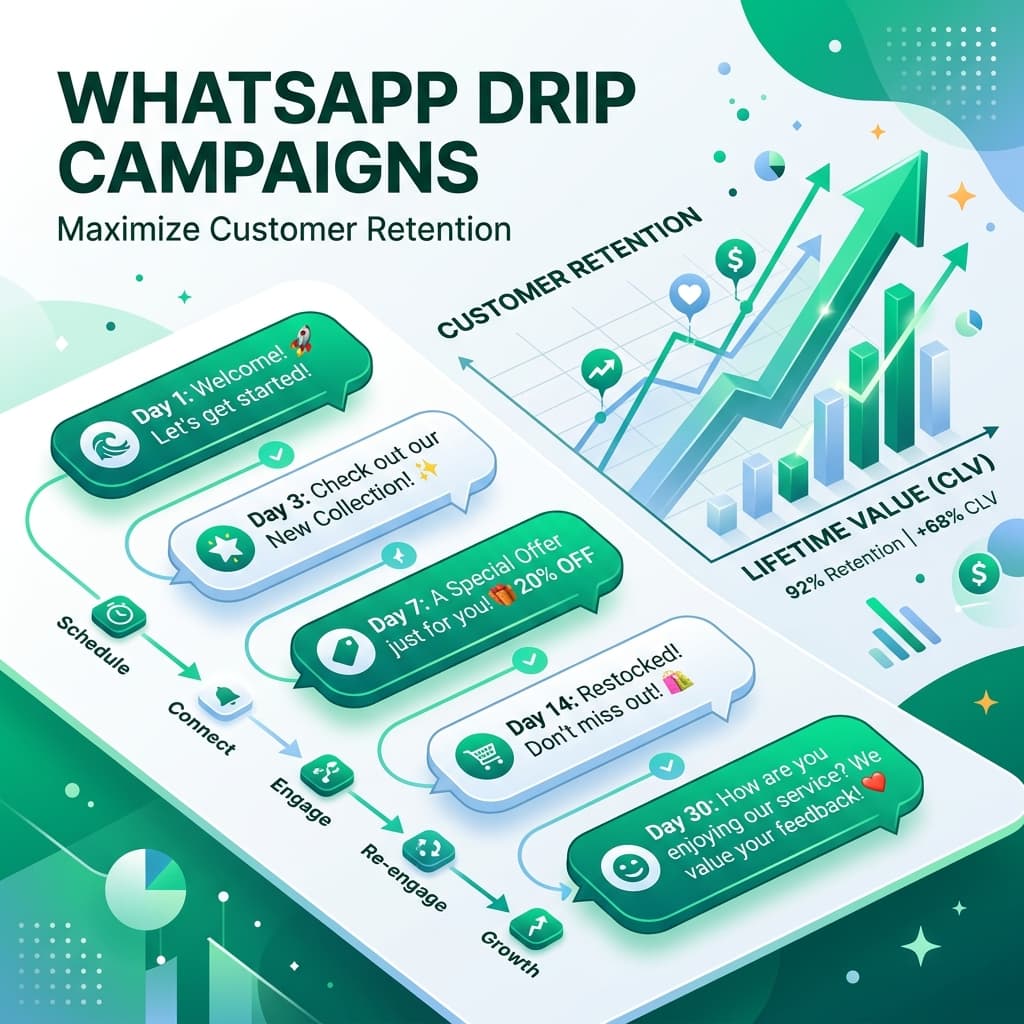
Most businesses lose leads because they stop following up too early. WhatsApp follow-ups get noticed faster, increase reply rates, and keep conversations active.
The Role of AI in WhatsApp Automation
AI-powered automation is transforming customer communication. AI works best for first responses, FAQ handling, lead qualification, smart routing, and automated reminders. However, AI alone does not fix poor communication systems. A weak workflow with AI still produces weak results. The businesses seeing the best ROI combine structured funnels, AI automation, human support, and personalized communication together.
The High-Converting WhatsApp Funnel
- Step 1 — Capture Attention: Engage users instantly after inquiry or signup.
- Step 2 — Qualify Intent: Understand whether the customer wants pricing, support, or a demo.
- Step 3 — Guide the User: Provide a clear next step instead of generic responses.
- Step 4 — Automate Follow-Ups: Stay visible with reminder workflows and nurture sequences.
- Step 5 — Convert Faster: Use urgency, trust, testimonials, and personalized communication.
The ROI Difference
The difference between random automation and structured automation is massive. Without Funnel Structure, 100 Leads might yield 5 Sales. With WhatsApp Funnel Automation, those same 100 Leads can yield 20+ Sales. The traffic remains the same. The system changes.
Where Email Marketing Still Works
Email marketing still performs well for newsletters, reports, documentation, educational content, and corporate communication. But for lead generation, real-time engagement, customer support, sales conversations, and faster conversions, WhatsApp automation is becoming the dominant channel in 2026.
Why Businesses Are Choosing Inaiwazhi
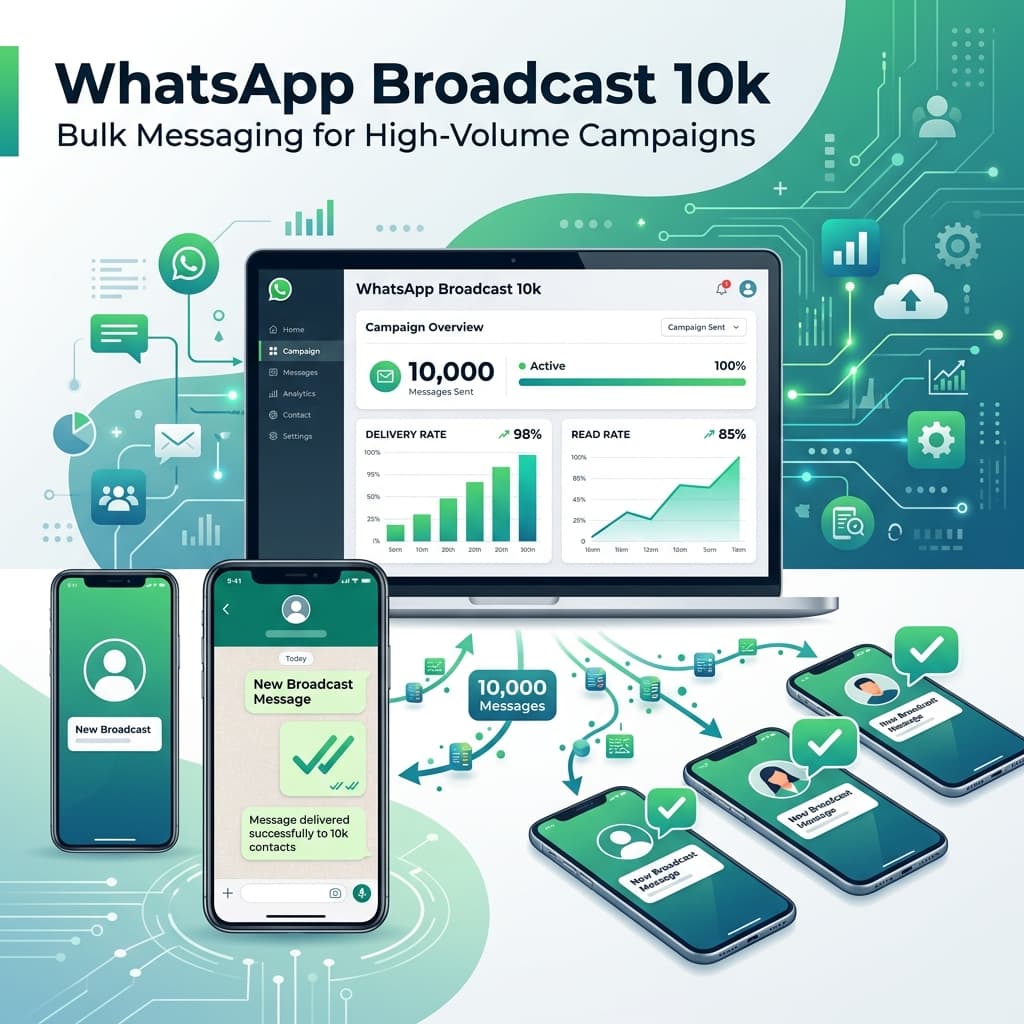
Inaiwazhi helps businesses build scalable WhatsApp automation systems designed for AI-powered customer communication, lead generation automation, WhatsApp API integrations, CRM integrations, E-commerce automation, automated follow-up systems, multi-agent support workflows, broadcast campaigns, and conversational sales funnels. Instead of sending random messages, businesses can build complete customer journeys optimized for conversions.
Conclusion: The Future Is Conversational
Customer expectations have changed. People now expect instant replies, personalized conversations, faster support, and mobile-first communication. That is why conversational automation is replacing traditional communication systems. Email marketing still has value. But when it comes to engagement, response speed, customer interaction, and real-time conversions, WhatsApp automation is leading the future.
Conversation
0 Comments
Leave a reply
No comments yet
Be the first to share your thoughts!